
Jonas Müller · 21 September 2026
Regional Ecosystem Variations Affecting Prism Visibility Outcomes in Mobile Transitions
Regional ecosystem variations shape prism visibility outcomes during mobile transitions because infrastructure differences, regulatory frameworks, and network densities create distinct conditions for data transmission and metric tracking across markets. Observers note that mobile transitions involve shifts between devices, operating systems, and carrier environments where prism metrics measure visibility through engagement signals and indexation rates.
Core Factors in Regional Ecosystem Differences
Network infrastructure density varies significantly between urban centers in East Asia and rural zones in South America, which affects how prism visibility registers during transitions, and researchers have documented that higher 5G penetration in certain corridors supports faster metric propagation while lower coverage areas experience delays in outcome reporting. Regulatory environments add another layer since data localization rules in the European Union require specific handling of transition logs whereas frameworks in Southeast Asia emphasize cross-border data flows that alter visibility calculation windows.
Device ecosystem composition also plays a direct role because market shares for operating systems differ by region, and studies from academic institutions show that Android dominance in parts of Africa and Latin America produces different prism outcome patterns compared with iOS-heavy segments in North America and Australia. Carrier partnerships influence these results further since exclusive agreements between device makers and telecom providers determine priority access during transitions.
Observed Patterns Across Major Regions
In the Asia-Pacific region, high population density combined with rapid infrastructure upgrades has produced measurable shifts in prism visibility during mobile transitions, and data from industry reports indicate that September 2026 saw accelerated 6G pilot rollouts in select corridors that shortened transition latency windows and improved outcome consistency. Australian regulators at the Australian Communications and Media Authority have published statistics showing how spectrum allocation changes impacted visibility tracking for migrated applications in that market.
European markets demonstrate tighter integration between privacy standards and visibility metrics, which means prism outcomes during transitions reflect compliance requirements more prominently, and evidence from university-led analyses reveals that GDPR enforcement timelines create predictable reporting cycles that differ from those in North American environments. Canadian government datasets on digital infrastructure highlight parallel effects where bilingual service mandates and provincial network variations add complexity to cross-device visibility measurements.
Latin American and African regions present contrasting conditions where intermittent connectivity and diverse device fleets extend transition durations, and research papers from regional institutions document that prism visibility outcomes stabilize more slowly under these circumstances compared with high-bandwidth zones. Those patterns emerge because carrier networks prioritize basic coverage over advanced metric synchronization in many locations.
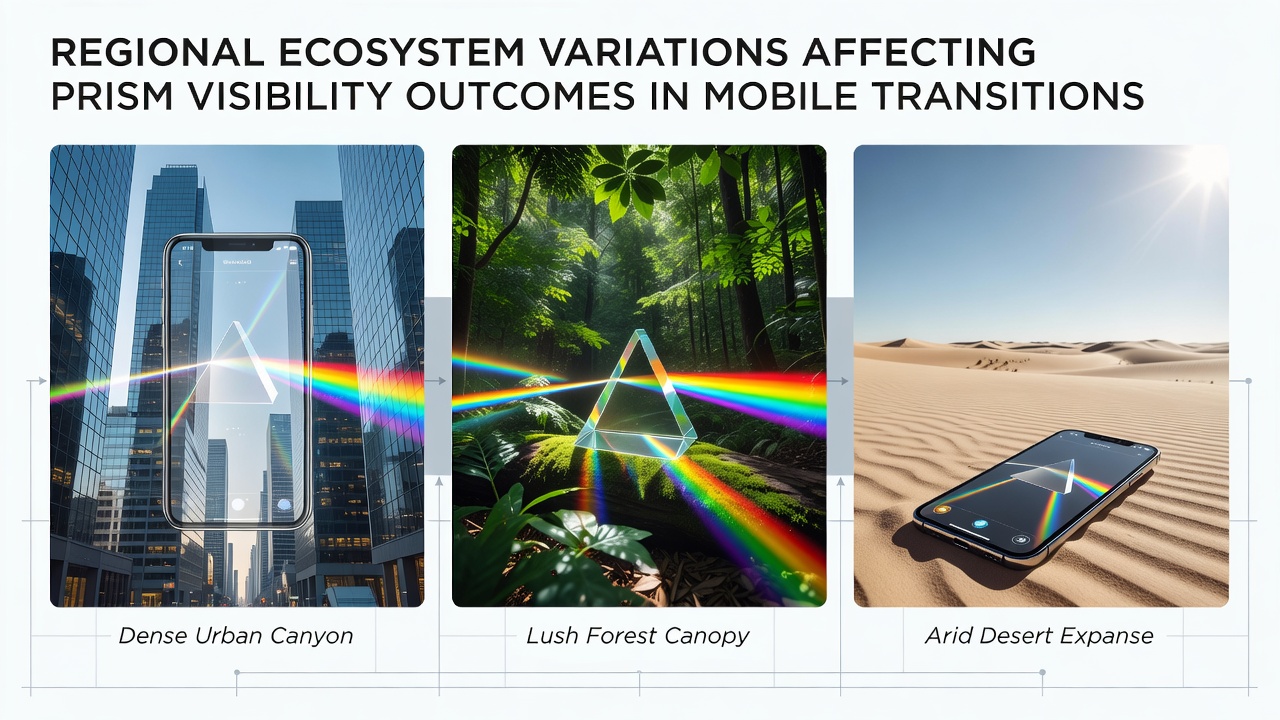
Impact on Mobile Transition Processes
Mobile transitions trigger prism visibility recalculations whenever users move between devices or networks, and regional ecosystem factors determine the speed and accuracy of those recalculations. In markets with unified carrier standards, transitions complete with minimal disruption to visibility scores whereas fragmented environments produce staggered updates that require extended monitoring periods. Experts tracking these processes point to September 2026 as a period when several regions implemented synchronized spectrum releases that temporarily aligned visibility outcomes across borders.
Device hardware variations compound these effects because sensor configurations and processing capabilities differ by manufacturer and region, which in turn influences how transition events register within prism frameworks. Observers have recorded that markets with standardized hardware certification processes experience more uniform visibility results during transitions than regions where multiple uncertified device types circulate.
Data Collection and Measurement Considerations
Accurate measurement of prism visibility outcomes depends on regional data collection infrastructure, and organizations such as the OECD have compiled comparative reports showing how sampling rates and reporting intervals vary by jurisdiction. These differences affect longitudinal studies of mobile transitions because datasets from one region may not align directly with those from another without adjustment for local ecosystem characteristics.
Industry associations in gaming and mobile sectors have contributed additional benchmarks that help isolate ecosystem effects from other variables, and such benchmarks reveal that transition events in high-density urban Asian networks produce distinct visibility curves compared with those in European regulatory environments. Researchers continue to refine models that account for these regional inputs when projecting future outcome patterns.
Conclusion
Regional ecosystem variations continue to determine the parameters of prism visibility outcomes throughout mobile transition cycles, and ongoing infrastructure developments, regulatory adjustments, and device market shifts sustain these differences across global markets. Data collection efforts from multiple jurisdictions provide the foundation for understanding how these factors interact during each transition event.